Most serious diabetic foot problems don’t start with major injuries. They usually begin with minor issues such as dry skin, redness, pressure spots, or minor irritation.
If you have diabetes, these small problems can become dangerous because diabetes can:
- Reduce feeling in the feet (neuropathy).
- Slow circulation, which impedes healing.
- Increase the risk of infection.
This means a small problem can quickly turn into ulcers, infections, tissue damage, or even amputation if it’s ignored.
The good news is that you can prevent most diabetic foot problems with daily care and the right support.
Daily Habits That Protect Your Feet
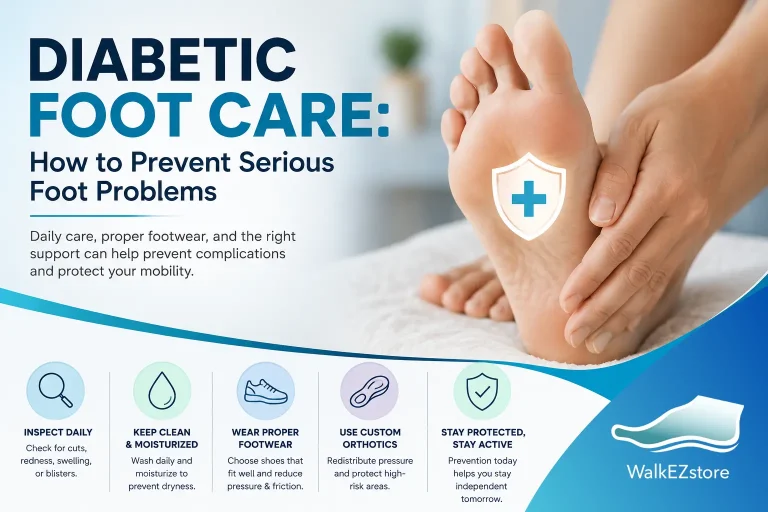
1. Inspect Your Feet Every Day
Check the tops, bottoms, heels, and between your toes daily.
Look for:
- Redness
- Swelling
- Blisters
- Cracks
- Corns or calluses
- Skin discoloration
- Temperature changes
If you cannot see your feet clearly, use a mirror or ask for help.
Recurring pressure spots or redness are often signs that your feet are not being properly supported.
An increase in temperature of 3 to 5 degrees in one or both feet may be a sign of the onset of a serious condition.
2. Keep Feet Clean and Dry
Wash your feet every day with warm, not hot, water and mild soap. Some soaps are made specifically for diabetic foot care.
Dry carefully, especially between the toes, where moisture can lead to fungal infections and skin breakdown.
Use a diabetic-approved moisturizer on dry skin to help prevent cracking. Many affordable, generic lotions for diabetic foot care are available at pharmacies. Here’s a simple checklist to help you choose a safe and effective product:
- Fragrance-free
- Absorbs quickly
- Does not leave a greasy or sticky residue
- Labeled as suitable for sensitive skin or for diabetic foot care
- Hypoallergenic
Example brands include K5 Neuropathy Treatment Lotion (recommended by many doctors), Gold Bond Ultimate Diabetics’ Dry Skin Relief, Eucerin Advanced Repair Foot Cream, and CeraVe Diabetic Skin Relief.
When applying moisturizer, avoid the area between your toes, as extra moisture there can cause problems. K5 Neuropathy Treatment Lotion is often recommended by doctors and is one of the few lotions made for use between the toes because it absorbs quickly. Many other diabetic-approved lotions are available, but always follow the checklist above. Controlling moisture is important because sweating, damp shoes, or poor airflow, and lotions that don’t absorb well can create the right conditions for bacteria and fungal infections to start and become serious.
3. Reduce Pressure and Friction
Pressure and friction are major causes of diabetic foot injuries.
Shoes that don’t fit well can cause rubbing, friction-induced heat, and stress on your skin. If you have neuropathy, you might not feel this damage as it happens.
Proper footwear should:
- Fit securely without being too tight.
- Provide enough room for the toes to move.
- Reduce rubbing and pressure.
- Support stable walking.
Loose shoes aren’t good either, since they can cause instability and friction. It’s a good idea to see a Nationally Recognized Board-Certified Pedorthist for help with proper footwear and support. You can ask your doctor for a referral or search online directories, like the Pedorthic Footcare Association’s Find a Pedorthist section (https://www.pedorthics.org/search/custom.asp?id=133). Some insurance plans may help cover visits or orthotic devices prescribed by a pedorthist, so check with your provider for details.
Why Custom Orthotics Matter
Custom orthotics are more than just shoe inserts. They are medical devices made to protect your feet and can help prevent diabetic foot problems.
They help:
- Redistribute pressure away from high-risk areas.
- Reduce friction and skin breakdown.
- Offload sensitive areas where the tissue is already a problem.
- Improve support and stability.
When you use custom orthotics with properly fitted shoes, they help lower your risk of ulcers and other problems before they start. Custom orthotics are usually prescribed by a doctor or a foot specialist, such as a podiatrist or a board-certified pedorthist. To get custom orthotics, ask your healthcare provider for an evaluation or referral. Many clinics and specialty stores also offer assessments for custom orthotic devices. If your feet have not been placed in impression foam, wrapped in plaster strips, or any other type of device to capture your feet individually to make a mold of your feet, then you are not receiving a true custom device. True custom orthotics are designed specifically for each foot to improve support, stability, and pressure relief. Over-the-counter devices are made in mirror-matched images and are not designed to the custom specifications of your individual feet. Custom is the best way to protect your feet.
The Cost of Ignoring Prevention
Diabetic foot complications are expensive — physically, emotionally, and financially.
- Treating a foot ulcer can exceed $40,000
- Amputations may exceed $70,000, not including rehabilitation and long-term care.
Prevention costs much less and is much less painful.
Most importantly, prevention helps you stay mobile and independent, and improves your quality of life.
When to Seek Medical Attention
Don’t ignore
- Redness or swelling.
- Open wounds or blisters, skin discoloration.
- Cracks that are worsening, wounds that are not healing.
- Increased warmth in one or both feet.
Persistent heat differences between the feet may signal Charcot Foot, a serious diabetic complication that can lead to fractures, soft-tissue damage, and possible collapse of the foot structure if left untreated.
If you notice any of these symptoms, call your doctor or healthcare provider within 24 hours. Acting quickly can help prevent small problems from becoming serious complications. Early treatment makes a difference.
Prevention is a Daily Routine
Diabetic foot care isn’t something you do once in a while. It needs to be part of your daily routine.
Simple habits like checking your feet, keeping them clean, controlling moisture, reducing pressure, and wearing proper shoes can prevent serious problems before they start.
At the WalkEZstore, we focus on properly fitting footwear and custom orthotics to help protect diabetic feet, reduce pressure, and support long-term mobility. You can also find diabetic footwear and custom orthotic solutions at many reputable medical suppliers, pharmacies, and specialty shoe stores. The most important thing is to choose shoes made for people with diabetes and make sure the person helping you is skilled in diabetic foot care, no matter where you buy them.
Take Action Before Problems Begin
If you have diabetes, don’t wait for pain or visible injury to take your foot health seriously.
The right shoes, good support, and regular care can help you stay mobile, independent, and protected for years to come.
Contact Kathy Carandang, Nationally Registered Board Certified Pedorthist and Owner of the WalkEZstore, to schedule an appointment and learn more about diabetic footwear and custom orthotic solutions designed to protect your feet and your future.