Walking: It’s More Complex Than You Think
Walking is something we do every day without thinking about it. In fact, the average person takes about 8,000 to 10,000 steps a day, according to the American Podiatric Medical Association. Over a lifetime, that adds up to roughly 115,000 miles—that’s like walking around the Earth more than four times.
But here’s the reality—walking isn’t simple.
It’s a coordinated effort involving your entire body:
- Head and shoulders for balance
- Arms for rhythm
- Spine and hips for stability
- Legs and feet for movement
In this post, we’re focusing on what matters most: your feet and legs—because that’s where everything starts.
What Is a Normal Walking Pattern? (Gait Cycle)
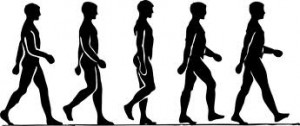
The way you walk is called your gait. A complete sequence of steps is known as the gait cycle.
Here’s what happens during a normal step:
Heel Strike
Your heel hits the ground first, with your knee slightly bent to absorb impact.
Mid-Stance
Your foot rolls forward and flattens slightly as your body weight shifts onto it.
(This is when your body is directly over your foot.)
Propulsion (Push-Off)
Your heel lifts, and your weight transfers to the ball of your foot and toes.
Your toes push off the ground, moving you forward.
Swing Phase
Your back leg swings forward like a pendulum to begin the next step.
This process repeats with every step—smooth, balanced, and efficient.
When Things Go Wrong: Poor Foot Mechanics
If your feet are properly aligned, everything above them works the way it should.
But if your feet are off—even slightly—your:
- Knees
- Hips
- Lower back
…have to compensate.
Here’s the problem: these joints were not designed to handle that extra stress from a faulty gait over time. Eventually, this compensation leads to:
- Pain
- Joint wear and tear
- Injury
The Two Most Common Walking Patterns
1. Pronation (Normal—but can become a problem)
Pronation is when your foot naturally rolls inward slightly after your heel hits the ground. This is normal and necessary—it helps absorb shock and maintain balance.
When It Becomes a Problem: Overpronation
This is when the foot rolls inward too much.
Signs include:
- Ankles collapsing inward
- Weight shifting to the inside of the foot
- Knees turning inward (knock-kneed)
- Shorter stride and reduced balance
Over time, this can lead to:
- Knee pain
- Hip pain
- Lower back pain
Important: Overpronation is responsible for 90–95% of foot problems.
2. Supination (The Opposite Problem)
Supination is when your foot rolls outward.
When It Becomes a Problem: Oversupination
This is when the foot doesn’t roll inward enough.
Signs include:
- Weight carried on the outside of the foot
- Ankles rolling outward
- Knees bowing outward (bow-legged)
This can lead to:
- Ankle instability
- Increased risk of ankle sprains
- Muscle strain along the outer feet and legs
In some cases, the foot loses the ability to properly use its arch (the natural curve that distributes weight and absorbs shock).
When that happens:
- The hip works harder to swing the leg forward
- Movement becomes less efficient
- Extra strain builds in the lower back and hips
Over time, this can cause:
- Muscle imbalances
- Tight glute muscles
- Lower back strain and pain
Why Balance Matters
Here’s something many people don’t realize:
A healthy step requires both pronation and supination—just at the right time.
- Your foot should pronate during mid-stance (to absorb shock)
- Then supinate during push-off (to become a stable, rigid lever for forward movement)
When either motion is excessive, your body loses efficiency.
That leads to:
- Fatigue
- Tiny tears in muscles and tendons (microtrauma)
- Inflammation and swelling
- Chronic pain
- Biomechanical imbalances (poor movement patterns) that can lead to foot deformities over time
How to Fix It: Support and Realignment
If your gait is off, the goal is simple:
Bring your feet back into proper alignment and restore efficient movement.
That’s where custom orthotics come in.
Realign Your Walk with ezWalker® Performance Insoles
Since 2008, ezWalker® Performance Insoles have helped people improve their walking—often with results in as little as 6 months to 1 year.
What Makes Them Different?
They’re made from a custom impression of your feet, captured in an ideal, corrected position for better biomechanics.
Most shoes and over-the-counter inserts are built from a generic, mirror-image model of an “average” foot. That’s a problem. No two feet are exactly alike.
The ezWalker® custom orthotics are designed specifically for your two unique feet, helping begin the process of:
- Realignment
- Stabilization
- Rehabilitation
—not a one-size-fits-all insert that can actually make things worse over time.
How They Help
Support all three arches:
- Medial arch (inside of foot)
- Lateral arch (outside of foot)
- Transverse arch (across the ball of the foot)
Guide proper movement:
- From heel strike → to push-off, your feet will begin to work better with your very first steps
- Helping your feet move more efficiently and grow stronger over time, like rehab for your feet
Improve biomechanics
(Simply put: better biomechanics is better movement = less strain on your body)
The Result
- Better foot alignment
- Less stress on joints
- Improved balance and stability
- Reduced pain in feet, knees, hips, and lower back
Take the Next Step
If you suspect overpronation or over-supination, or have foot pain and can’t figure out why:
- Get evaluated by a Nationally Registered, Board-Certified Pedorthist
- Consider a custom orthotic solution, along with properly fitted footwear
ezWalker® Performance Insoles are designed to restore proper movement with every step you take.
Walk Better. Feel Better.
When your feet are aligned and supported, everything above them works better, too.
Give your feet what they deserve—with a custom fit from WalkEZstore. Your whole body will thank you for it!
Because when your feet feel good… you feel good.